Chapter 2 the Family, Culture, Spirituality, and Home Care
What is civilization?

Culture is the characteristics and knowledge of a particular grouping of people, encompassing language, religion, cuisine, social habits, music and arts.
The Heart for Advanced Research on Language Acquisition goes a step further, defining civilization as shared patterns of behaviors and interactions, cognitive constructs and understanding that are learned by socialization. Thus, culture can be seen as the growth of a grouping identity fostered past social patterns unique to the grouping.
"Culture encompasses organized religion, nutrient, what we wear, how nosotros wear it, our linguistic communication, wedlock, music, what we believe is right or wrong, how we sit at the tabular array, how we greet visitors, how we conduct with loved ones and a 1000000 other things," Cristina De Rossi, an anthropologist at Barnet and Southgate College in London, told Live Science.
Many countries, such as France, Italia, Frg, the U.s., India, Russian federation and China are noted for their rich cultures, the customs, traditions, music, art and food being a continual describe for tourists.
The word "culture" derives from a French term, which in plow derives from the Latin "colere," which means to tend to the world and abound, or cultivation and nurture, according to Arthur Asa Berger. "Information technology shares its etymology with a number of other words related to actively fostering growth," De Rossi said.
Western culture
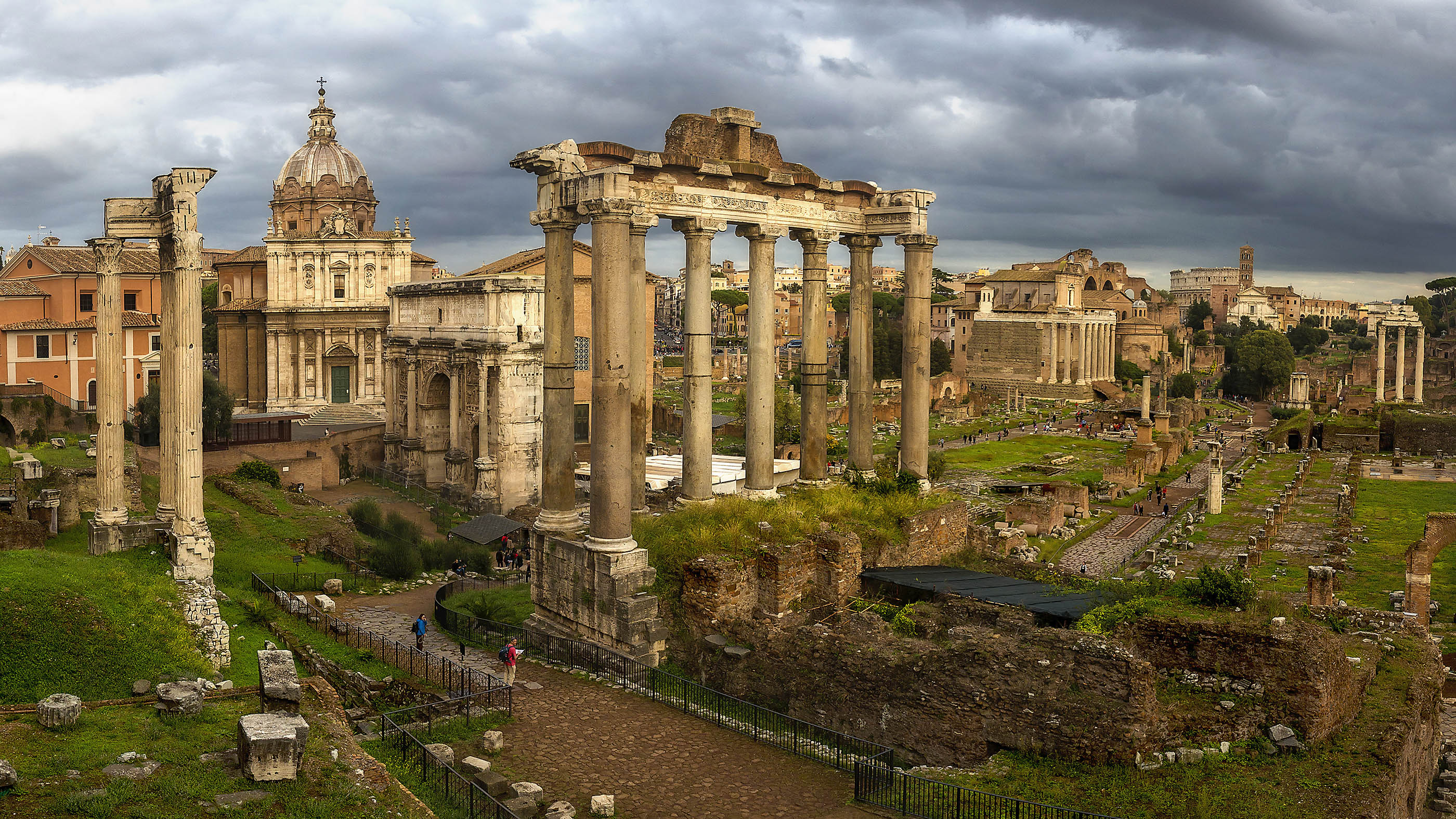
The term "Western civilisation" has come to define the culture of European countries as well every bit those that have been heavily influenced by European immigration, such as the United States, co-ordinate to Khan University. Western civilisation has its roots in the Classical Period of the Greco-Roman era (the fourth and 5th centuries B.C.) and the rise of Christianity in the 14th century. Other drivers of Western culture include Latin, Celtic, Germanic and Hellenic ethnic and linguistic groups.
Any number of historical events take helped shape Western culture during the past 2,500 years. The fall of Rome, often pegged to A.D. 476, cleared the fashion for the institution of a series of often-warring states in Europe, co-ordinate to Stanford University historian Walter Scheidel, each with their ain cultures. The Black Death of the 1300s cut the population of Europe past one-third to one-half, rapidly remaking gild. As a result of the plague, writes Ohio Country University historian John L. Brooke, Christianity became stronger in Europe, with more than focus on apocalyptic themes. Survivors in the working class gained more power, as elites were forced to pay more for deficient labor. And the disruption of trade routes between Due east and West set off new exploration, and ultimately, the incursion of Europeans into Due north and Southward America.
Today, the influences of Western culture can exist seen in well-nigh every state in the world.
Eastern civilisation

Eastern culture generally refers to the societal norms of countries in Far East asia (including China, Japan, Vietnam, North Korea and South Korea) and the Indian subcontinent. Similar the Westward, Eastern culture was heavily influenced past faith during its early development, but it was besides heavily influenced by the growth and harvesting of rice, according to a research article published in the journal Rice in 2012. In full general, in Eastern culture there is less of a stardom between secular order and religious philosophy than there is in the West.
Nevertheless, this umbrella covers an enormous range of traditions and histories. For example, Buddhism originated in Republic of india, but it was largely overtaken by Hinduism afterwards the 12th century, according to
Britannica.
As a effect, Hinduism became a major driver of culture in Republic of india, while Buddhism continued to exert influence in Cathay and Japan. The preexisting cultural ideas in these areas also influenced religion. For example, according to
Jiahe Liu and Dongfang Shao, Chinese Buddhism borrowed from the philosophy of Taoism, which emphasizes pity, frugality and humility.
Centuries of interactions — both peaceful and aggressive — in this region too led to these cultures influencing each other. Nihon, for example, controlled or occupied Korea in some course between 1876 and 1945. During this time, many Koreans were pressured or forced into giving up their names for Japanese surnames, co-ordinate to History.com.
Latin culture
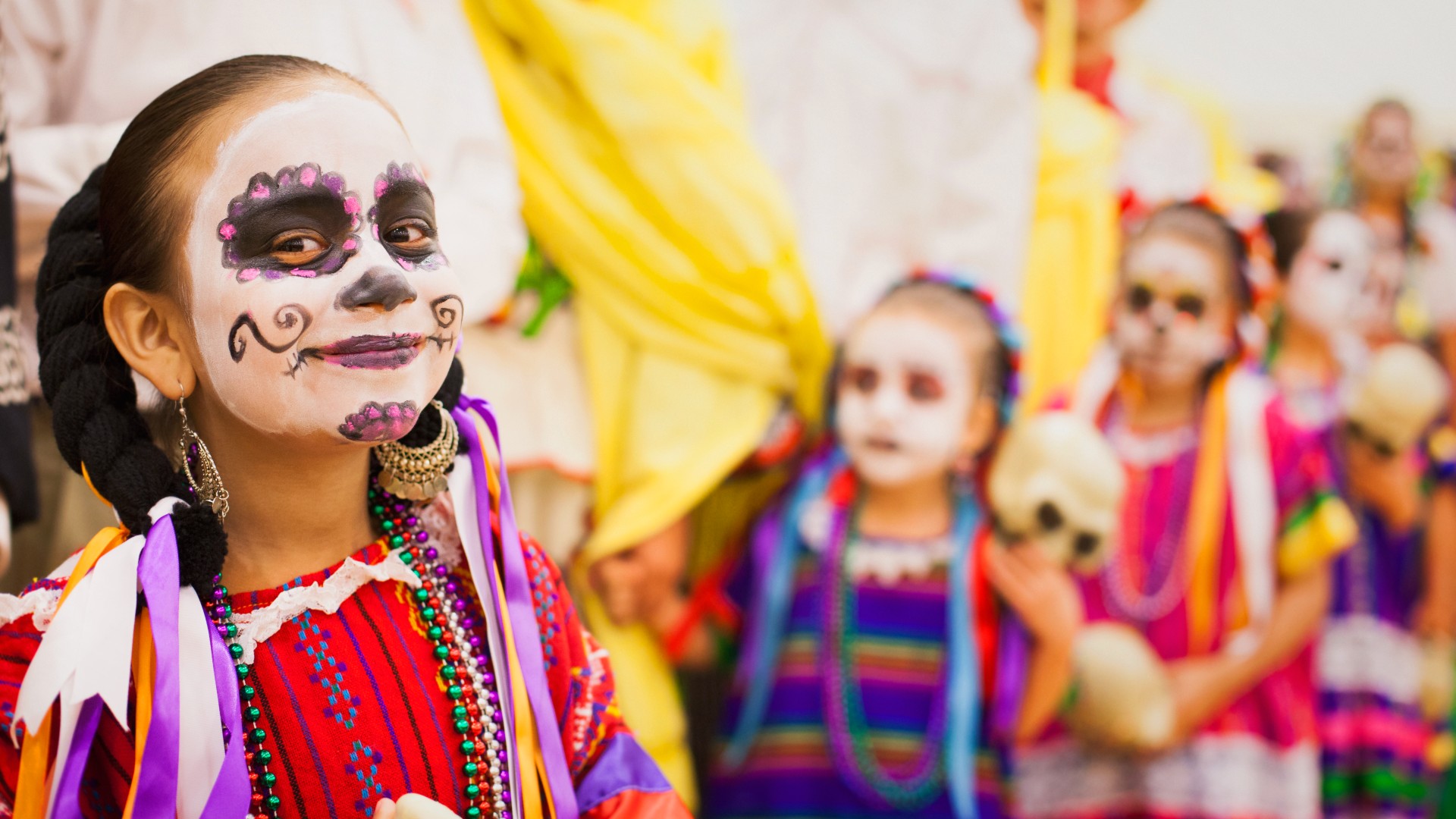
The geographic region encompassing "Latin culture" is widespread. Latin America is typically defined as those parts of Central America, Southward America and Mexico where Spanish or Portuguese are the dominant languages. These are all places that were colonized by or influenced by Spain or Portugal starting in the 1400s. It is thought that French geographers used the term "Latin America" to differentiate between Anglo and Romance (Latin-based) languages, though some historians, such every bit Michael Gobat, writer of "The Invention of Latin America: A Transnational History of Anti-Imperialism, Democracy and Race" (American Historical Review, Voll 118, Issue v, 2013), dispute this.
Latin cultures are thus incredibly various, and many blend Ethnic traditions with the Castilian language and Catholicism brought by Castilian and Portuguese colonizers. Many of these cultures were likewise influenced by African cultures due to enslaved Africans being brought to the Americas starting in the 1600s, according to the African American Registery. These influences are particularly strong in Brazil and in Caribbean area nations.
Latin culture continues to evolve and spread. A skilful case is Día de los Muertos, or Day of the Dead, a holiday dedicated to remembering the departed that is celebrated on Nov. 1 and November. 2. Day of the Dead dates back to earlier Christopher Columbus landed in North America, simply was moved to its current celebration appointment by Spanish colonizers, who merged it with the Cosmic All Saints Twenty-four hour period.
Mexican immigrants to the United States brought the holiday with them, and in the 1970s, artists and activities brought focus to Día de los Muertos as a way of celebrating their Chicano (Mexican-American) heritage, co-ordinate to the Smithsonian American Art Museum. The holiday is at present well-known in the Us.
Middle Eastern culture

Roughly speaking, the Heart East encompasses the Arabian peninsula besides as the eastern Mediterranean. The North African countries of Libya, Egypt and Sudan are besides sometimes included, according to Britannica. The term "Middle Eastern culture" is another umbrella that encompasses a huge diversity of cultural practices, religious behavior and daily habits. The region is the birthplace of Judaism, Christianity and Islam and is home to dozens of languages, from Arabic to Hebrew to Turkish to Pashto.
While there is significant religious diversity in the Middle E, the predominant religion by numbers is Islam, and Islam has played a large office in the cultural development of the region. Islam originated in what is today Kingdom of saudi arabia in the early on 7th century. An influential moment for the culture and development of the Middle East came after the death of the religion's founder, Muhammad, in 632, according to the Metropoliton Museum.
Some followers believed the next leader should exist one of Muhammad's friends and confidants; others believed leadership must be passed through Muhammad's bloodline. This led to a schism between Shia Muslims, those who believed in the importance of the bloodline, and Sunni Muslims, who believed leadership should not pass through the family. Today, virtually 85% of Muslims are Sunni, according to the Council on Strange Relations. Their rituals and traditions vary somewhat, and divisions between the 2 groups often fuel disharmonize.
Middle Eastern culture has likewise been shaped by the Ottoman Empire, which ruled a U-shaped band around the eastern Mediterranean between the 14th and early 20th centuries, according to Britannica. Areas that were role of the Ottoman Empire are known for distinctive architecture fatigued from Persian and Islamic influences.
African culture
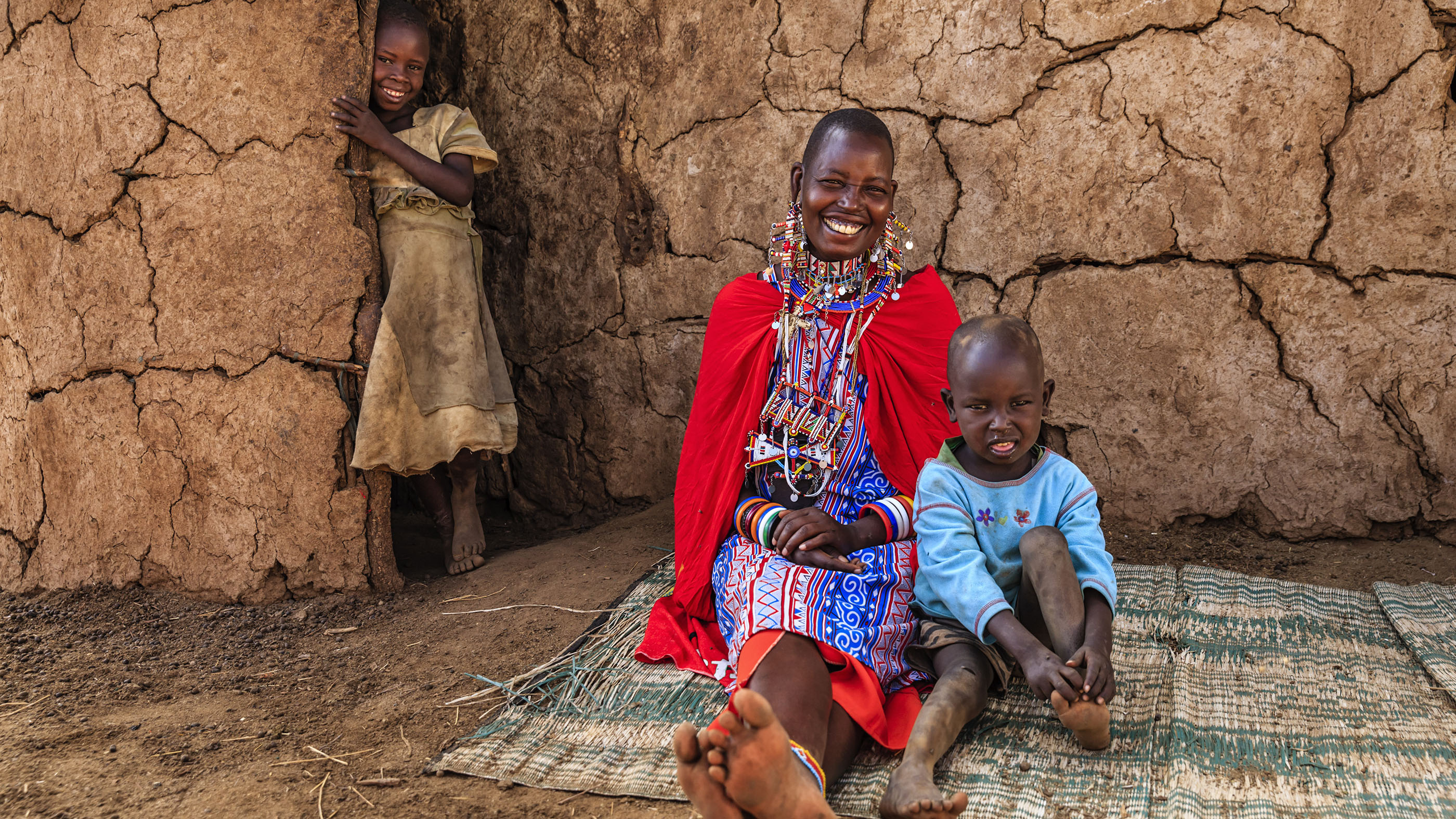
Africa has the longest history of human habitation of whatsoever continent: Humans originated there and began to drift to other areas of the globe around 400,000 years ago, co-ordinate to the Natural History Museum in London. Tom White, who serves as the museum'southward senior curator of non-insect invertebrates, and his team were able to discover this by studying Africa'south ancient lakes and the animals that lived in them. Every bit of the time of this article, this inquiry provides the oldest evidence for hominin species in the Arabian peninsula.
African culture varies not only between national boundaries, but within them. One of the central features of this culture is the large number of indigenous groups throughout the 54 countries on the continent. For example, Nigeria lone has more than than 300 tribes, co-ordinate to Culture Trip. Africa has imported and exported its civilization for centuries; East African trading ports were a crucial link between East and West equally early on as the seventh century, according to The Field Museum. This led to complex urban centers along the eastern coast, often connected by the movement of raw materials and goods from landlocked parts of the continent.
It would exist impossible to characterize all of African civilisation with one description. Northwest Africa has strong ties to the Eye East, while Sub-Saharan Africa shares historical, physical and social characteristics that are very different from North Africa, according toBritannica .
Some traditional Sub-Saharan African cultures include the Maasai of Tanzania and Kenya, the Zulu of South Africa and the Batwa of Central Africa. The traditions of these cultures evolved in very unlike environments. The Batwa, for example, are one of a group of ethnicities that traditionally live a forager lifestyle in the rainforest. The Maasai, on the other manus, herd sheep and goats on the open range.
What is cultural appropriation?
Oxford Reference describes cultural appropriation as: "A term used to describe the taking over of artistic or artistic forms, themes, or practices past one cultural group from some other."
An example might exist a person who is not Native American wearing a Native American headdress as a manner accessory. For case, Victoria's Cloak-and-dagger was heavily criticized in 2012 afterward putting a model in a headdress reminiscent of a Lakota war bonnet, according to USA Today. These headdresses are laden with meaningful symbolism, and wearing 1 was a privilege earned by chieftains or warriors through acts of bravery, according to the Khan Academy. The model also wore turquoise jewelry inspired by designs used past Zuni, Navajo and Hopi tribes in the desert Southwest, illustrating how cultural appropriation can lump together tribes with very different cultures and histories into one stereotyped image.
More recently, in 2019, Gucci faced a like backfire for selling an item named "the indy full turban" which acquired considerable anger from the Sikh community, according to Esquire. Harjinder Singh Kukreja, a Sikh restaurateur and influencer, wrote to Gucci on Twitter, stating: "the Sikh Turban is not a hot new accessory for white models but an article of faith for practising Sikhs. Your models have used Turbans as 'hats' whereas practising Sikhs tie them neatly fold-by-fold. Using fake Sikhs/Turbans is worse than selling faux Gucci products."
Constant modify
No matter what a culture looks like, 1 affair is for certain: Cultures change. "Culture appears to have become key in our interconnected world, which is made up of so many ethnically diverse societies, simply too riddled by conflicts associated with religion, ethnicity, ethical beliefs, and, essentially, the elements which make upwardly culture," De Rossi said. "But culture is no longer fixed, if it e'er was. It is essentially fluid and constantly in move."
This makes it difficult to define any civilisation in only one way. While change is inevitable, most people see value in respecting and preserving the past. The United Nations has created a group called The Un Educational, Scientific and Cultural Organization (UNESCO) to identify cultural and natural heritage and to conserve and protect it. Monuments, buildings and sites are covered by the group's protection, according to the international treaty, the Convention Concerning the Protection of the World Cultural and Natural Heritage. This treaty was adopted past UNESCO in 1972.
Additional reporting past Live Scientific discipline Contributors Alina Bradford, Stephanie Pappas and Callum McKelvie.
Source: https://www.livescience.com/21478-what-is-culture-definition-of-culture.html
0 Response to "Chapter 2 the Family, Culture, Spirituality, and Home Care"
Enregistrer un commentaire